One developmental ladder, designed for every age in school.
Lumii is the insight layer for child safeguarding and wellbeing in schools — built around three pupil tiers (Early Years, JNR, SNR) plus a separate, private space for staff, all under one safeguarding architecture.
Not one product, scaled down for younger users.
An eight-year-old does not interact with their feelings the same way a fifteen-year-old does. Lumii's developmental ladder reflects that — with three pupil tiers, each shaped around the cognitive, emotional, and language stage of the pupils it serves. Early Years (under 6) is icon-based and pre-literacy. Within JNR and SNR, age-banded sub-tiers (6–8 and 8–11 in JNR, 12–14 and 14+ in SNR) calibrate further.
Cross-tier transitions are handled within the school deployment, not by the pupil.
Five elements, anchored by the LMHM.
The architecture in one diagram. Pupil voice flows in. The LMHM reasons over each interaction in cultural and developmental context. Routing decides what reaches a trained adult and when. Case management captures the full record. Every flag is reviewed by the school's wellbeing or safeguarding team.
Pupil voice flows in → LMHM reasons in cultural and developmental context → Routing decides what reaches a trained adult → Case management records the full picture. The school's wellbeing or safeguarding team decides what happens next.
A confluence of models, anchored by the LMHM.
Lumii is not a single model. It is a confluence of purpose-built models — each one trained for a specific job — anchored by the Large Mental Health Model at the centre. This is what makes Lumii safe to deploy in any UAE classroom, in any of 30+ languages, with any pupil profile, without losing the cultural and developmental judgement the work demands.
The LMHM — the reasoning core
A proprietary Large Mental Health Model trained on 40+ years of peer-reviewed mental health and safeguarding research. Not scraped from the open web. Not fine-tuned from a general-purpose chatbot. Built from the evidence base the field itself relies on — child psychology, adolescent development, trauma-informed practice, safeguarding frameworks, cultural and faith contexts. Every flag, every reasoning note, every routing decision originates here. Pupil-facing conversation is also powered by the LMHM — every reflection, every calming response, every piece of practical scaffolding.
The translation layer — listening in the child's language
A purpose-built translation model that lets children speak to Lumii in any of 30+ languages, including a UAE Islamic version. The reasoning happens in the language the child chose — not translated around an English core.
The UAE International cultural model
For the majority of pupils across UAE international schools. Recognises that everyone in the conversation lives in the Emirates — Ramadan, National Day, Eid, the school week, the climate, the multicultural classroom, modest dress norms, the broader Gulf context.
The Emirati cultural model
For Emirati pupils and Emirati-majority settings. Anchored in the values codified in the UAE National Education Charter and the Emirati National Identity Strategy — pride in the Arabic language, grounding in Islamic values, the centrality of family, national identity and belonging, integrity and generosity as core values.
Accessibility models
Voice-to-text, inclusive fonts, EAL support — so the doorway is open to every child, including those who struggle to type, read with dyslexia, or are still developing English alongside their first language.
A walled garden by architecture — nothing in, nothing out. Agentic by design. Human-overseen by architecture.
Lumii is the first agentic AI safeguarding and wellbeing platform built for UAE schools.
Four dimensions, by design.
Lumii is built around SeIRE — Self-empowerment, Intellectual, Relational, Emotional. Four dimensions, anchored in the daily voice of pupils and staff. Physical sits outside the framework because Lumii has no Physical SEL products — that work belongs with PE, health and pastoral provision in the school.
Self-empowerment
Voice, agency, confidence to express how the day is going — without pressure to disclose.
Intellectual
Reflection, vocabulary, the cognitive work of naming what's happening internally.
Relational
Friendships, family, the dynamics of belonging at school and at home.
Emotional
Mood, regulation, the patterns that build over days, weeks and terms.
SeIRE and SPIRE — how they relate. SeIRE is the dimensional architecture of Lumii. SPIRE is the ADEK inspection framework that adds Physical as a fifth dimension. Lumii covers four of the five SPIRE dimensions, deeply and daily. Physical sits with your existing PE and health provision.
Lumii Early Years
Teacher-led by design. Children engage in the presence of, and with the support of, an adult. Pre-literacy and emerging-literacy pupils, working through emoji-based feelings expression and very short interaction cycles.
How it works
- Teacher-led classroom experience — strong adult oversight throughout
- Emoji-based feelings expression
- Optional safe AI interaction, tailored to EY
- Visual rather than verbal — minimal cognitive load
- No free-text input dependency
Important distinction: EY is teacher-led by design. Real time pupil voice — the structural claim that defines Lumii — begins at JNR (age 6+). Both are part of the same developmental ladder; they are not the same kind of channel.
Lumii JNR
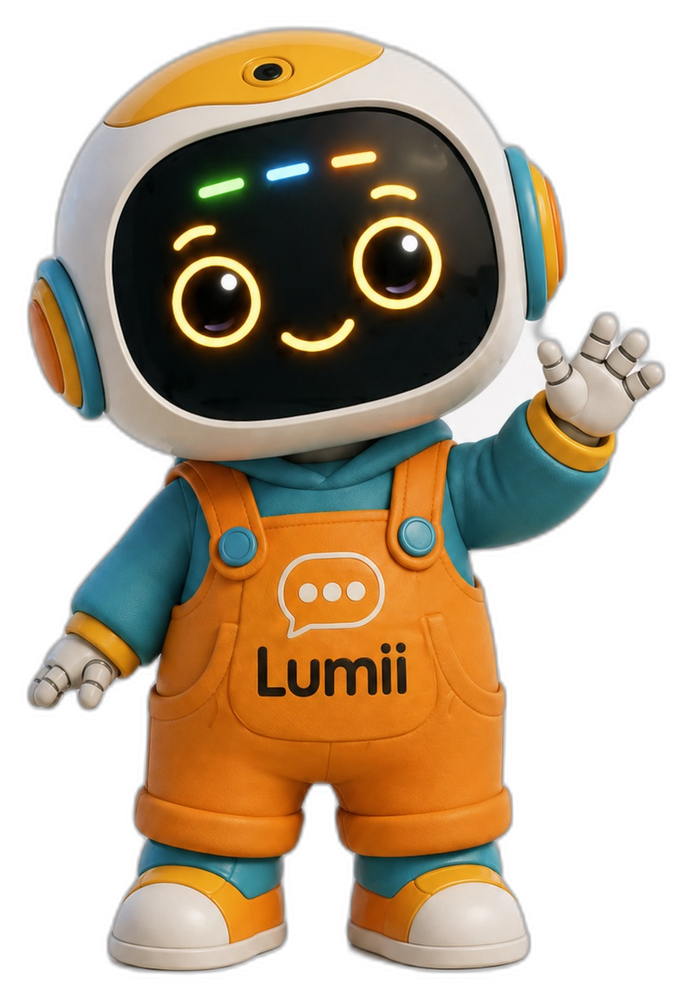
Engagement-first, low text burden, playful but purposeful. Two developmental sub-tiers (6–8 and 8–11) inside one product.
How pupils share
- Safe, age-appropriate AI interaction
- Emoji-based feelings check-in at session start
- Stories with embedded wellbeing signals
- Quests with passive safeguarding capture
- Avatar, sticker, and creative tools
- Study Buddy — task breakdown, never answers
Lumii SNR
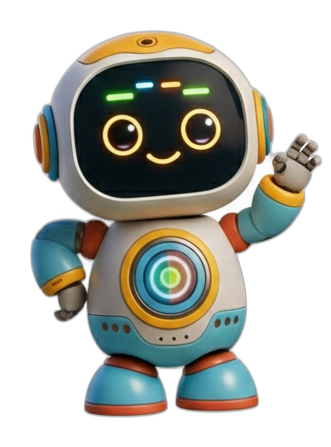
More mature tone, deeper reflection capability. Two sub-tiers (12–14 and 14+) — the younger tier holds firmer boundaries, the older tier allows greater reflective depth under the same safeguarding architecture.
How pupils share
- Free-text AI interaction with contextual memory across sessions
- Mood check-in
- Private journalling with reflective prompts
- Study Buddy — revision and planning support
- Personalised themes, avatar, decor
- Choose your own language (30+ supported)
A separate, private space for staff.
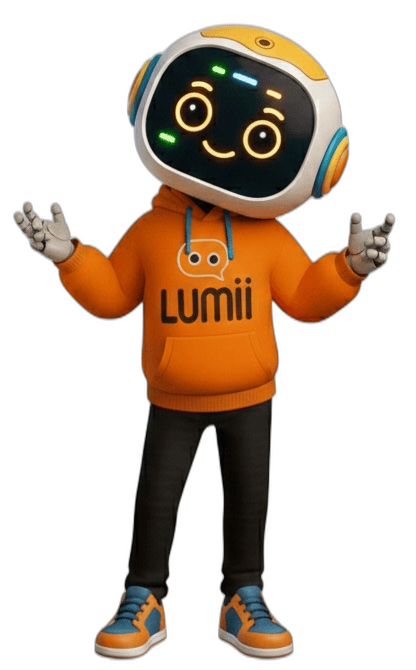
Educators give a great deal. Lumii.me+ gives something back — a confidential reflection space built on the same emotional insight model, kept entirely separate from the pupil system.
What staff get
- Private daily reflection space
- Personalised coping prompts
- Multilingual and culturally adaptive
- Available whenever staff need it
What leadership sees
- Aggregated, anonymous wellbeing trends
- Never individual conversations
- Helps shape staff wellbeing strategy
- Designed to support staff wellbeing and retention
No cost to trial. No lock-in. Setup in one hour. Free webinar places included — not free in exchange for a multi-year contract.
The teaching layer alongside the listening layer.
Lumii is the listening layer — it hears what pupils don't say out loud. Lumii Curriculum is the teaching layer alongside it — a structured Social Emotional Learning pathway that schools deliver in the classroom.
Lesson resources, classroom activities, and ongoing curriculum updates — designed to build the emotional vocabulary and reflection skills that pupils then bring to Lumii every day.
Currently deployed with Abu Dhabi Charter Schools. Not in general release.
What it includes
- Structured SEL pathway across age tiers
- Lesson plans and classroom activities
- Ongoing content updates through the academic year
- Aligned with the same emotional framework as Lumii
The intelligence layer behind everything.
The school-facing dashboard is where insight becomes action. Available to authorised staff only.
- Emotional trends across days, weeks, and terms
- Alert distribution: Green / Amber / Purple / Red
- Positive emotion tracking
- Year-group and class comparisons
- Pattern visibility over time
- Safeguarding case tracking with full audit trail
- SLT sees trends — not individual conversations (unless they hold an authorised safeguarding role)
Where everything that surfaces lives.
When a concern is raised — from pupil voice, from a staff observation, or both — it goes straight into the case management layer. One continuous safeguarding record per pupil, held in one place, with one audit trail underneath.
Members of the school's wellbeing and safeguarding team can raise a concern directly from the dashboard — capturing observations, attaching relevant Lumii conversations and teacher notes, and assigning the alert level from a dropdown. The DSL receives the case with everything in one view.
A pupil's record holds two voices: their own, and the trained adult's observations. Both feed into the same Amber / Purple / Red triage system. Both surface to the right staff at the right time. Case management is included in Lumii — not a separate module.
The lifecycle of a concern
Raise concern
From a Lumii flag, a staff observation, or both — captured in one form.
Assign alert level
Amber, Purple or Red via dropdown — same structure as pupil voice.
DSL receives case
Observations, conversations and teacher notes all in one case view.
Action and follow-up
Timestamps, named staff, action notes — captured as the case progresses.
Close with reasoning
Detailed notes on why the case closed — sealed into the audit trail.
Built for UAE schools — not retrofitted from a UK or US system.
Safeguarding case management in the UAE is structurally different from the UK and US. There is no equivalent of the UK's connected referral pathway between schools, police and social services. UAE schools operate within their own safeguarding policy and the reporting flows set by their regulator — which means case management here must capture the full picture inside the school, with the audit trail to evidence it. Lumii is designed around the structures of UAE education and safeguarding from the architecture up. What a regulator sees is what the school actually did, when they did it.
Streams into an ocean.
Each data stream is a river. The ocean is the whole picture of the child — where they are, safeguarding and wellbeing. A behaviour note alone reads as a discipline problem; next to a pupil-voice dip and a staff observation it reads as a child who needs help.
Pupil voice
What children say — daily, in their own words, in a space they trust.
Case management
What adults see — staff observations and concerns, held in one continuous record.
Behaviour tracking
What patterns show — positive and negative observations, read in emotional context. Not a points system.
Surveys surface what was asked. The streams surface what is happening.
Ask Lumii. Get answers. Get a way forward.
Lumii Insight is built into the dashboard. Authorised staff can ask plain-language questions about what's happening across the school, dig into the patterns Lumii has surfaced, and receive practical suggestions on how to support — for an individual pupil, a year group, or the whole school.
What staff can ask
These examples are queries authorised staff might run on the dashboard. Pupil identity is held only by the school — Lumii surfaces patterns and signals, never names.
The principle remains the same
Lumii Insight supports the school's wellbeing and safeguarding team — it does not replace their judgement. It helps staff act on what Lumii has surfaced, with insight grounded in the school's own data. Decisions remain with the people authorised to make them. Lumii Insight is powered by the LMHM.
Spotting the patterns. Never assigning the label.
Some pupils experience the school day differently from their peers. Difficulties with emotional regulation, school avoidance, or social communication often go unnoticed for a long time — particularly in pupils who mask well or come from cultures where seeking support feels difficult. Lumii's neurodiversity traits model is designed to help schools see these patterns earlier.
Patterns the model identifies
- Emotional regulation challenges
- EBSA (Emotionally Based School Avoidance) indicators
- Social-communication signals
- Self-esteem patterns
What it never does
- Diagnose any condition
- Assign labels to pupils
- Replace the judgement of an educational psychologist or clinician
- Trigger automatic referrals
Clinical authorship
The neurodiversity traits model is authored and clinically governed by Dr Yebeltal Gezahegn, Consultant Neuropsychiatrist. Patterns identified by Lumii are surfaced as trend-based signals — they support professional judgement, never substitute for it. All outputs are probabilistic and require human review before any action.
Refined continuously in close consultation with schools and clinical partners.
SEL growth, surfaced from the same daily data.
Schools deliver Social Emotional Learning across PSHE, pastoral programmes, and curriculum. The harder part has always been showing what's actually shifting in pupils as a result. Lumii surfaces SEL growth from real time pupil voice — the same data already informing safeguarding and wellbeing — without asking pupils to fill in another form.
What Lumii surfaces
- Self-awareness and emotional vocabulary growth
- Self-regulation patterns over time
- Social awareness and peer empathy signals
- Relationship dynamics across friendship groups
- Responsible decision-making indicators in everyday reflection
What schools do with it
- Year-group and class-level trend reports for pastoral leads
- Targeted SEL focus where the data shows it's needed
- Evidence of change between terms — not just at year-end
- Inspection-ready outputs aligned with framework expectations
- Curriculum review and refinement based on what's landing
SEL is downstream of wellbeing — the data Lumii already captures lets schools target SEL more precisely, without adding new tracking. Where Lumii Curriculum is deployed alongside, the loop closes: teach in the classroom, hear the impact in the data.
One platform. Every age. Built for safety.
A two-week trial. Setup in 1 hour. No accounts, no passwords, no infrastructure changes.